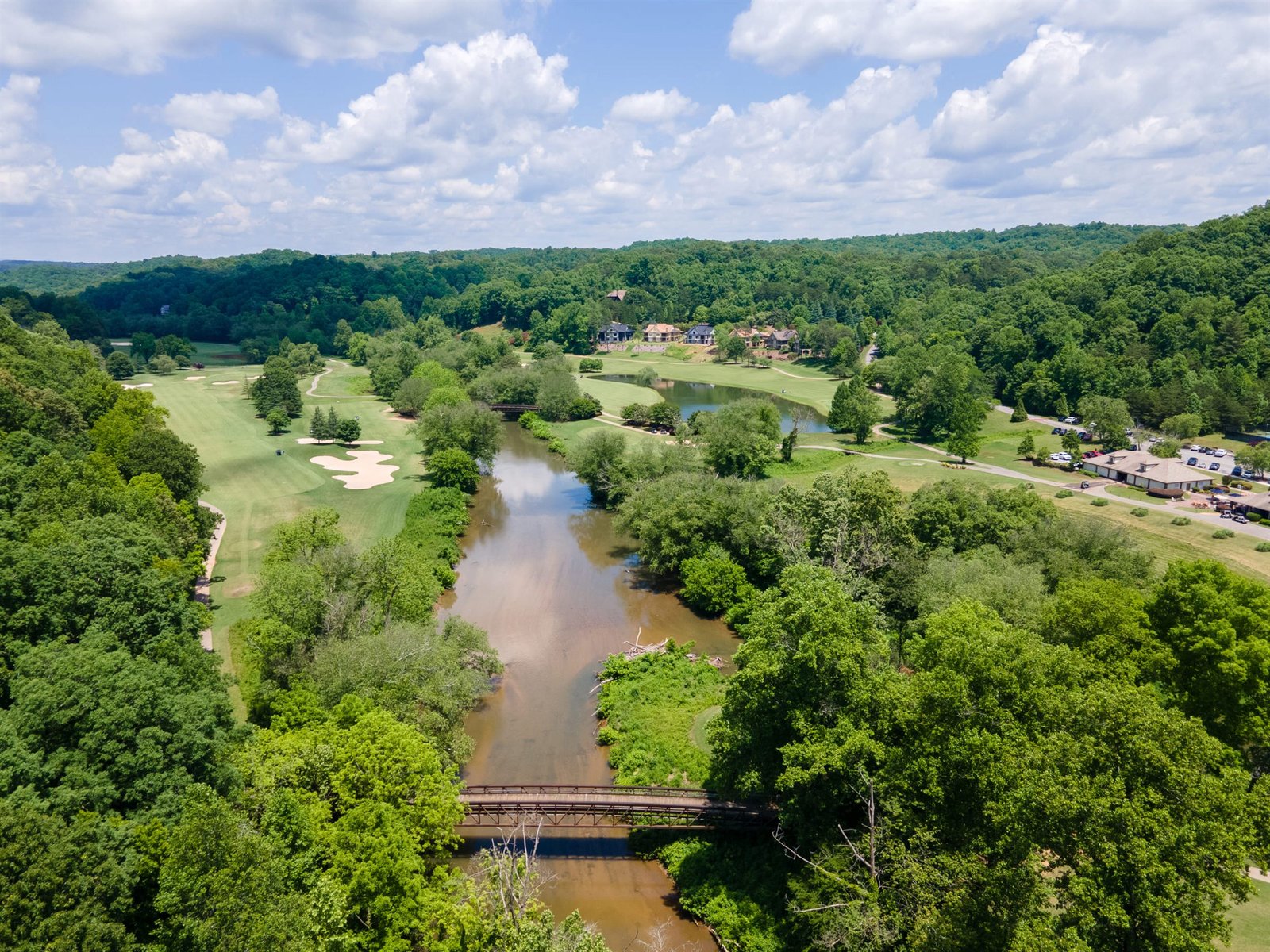
What’s it like to live in Achasta?
What it is actually like to live inside the gates at Achasta , the morning rhythm, the workdays at altitude, the seasons, the practical truths most marketing brochures skip. A buyer-evaluating-fit perspective, grounded in what residents say.
The morning rhythm.
Residents say the day at Achasta starts on the cart paths, almost literally. By a little after seven, the paved network connecting the residential pods to the clubhouse and the river park has its first wave of foot and cart traffic , dog walkers heading toward the Chestatee, members rolling toward the practice tee, an occasional jogger looping through the back nine. The pace is unhurried in a way that distinguishes Achasta from the suburban-cul-de-sac comp set.
The river park is the unofficial second waypoint. The riverside path runs the Chestatee frontage at the south boundary, with picnic clearings, hardwood shade, and footbridge crossings that put you onto the back-nine fairways before the course officially opens. Residents who grew up elsewhere often describe the morning at Achasta as the part they did not understand until they had lived there a season , the air, the bird traffic, the river noise. None of it is photographable in a brochure, and all of it is what residents say sells the place.
Workdays at altitude.
The most-asked question from a prospective Achasta buyer is whether the community is genuinely viable for remote work, and the resident answer is yes, with the qualifications outside buyers do not anticipate. The infrastructure is the easy part. Multiple fiber providers serve the community with symmetrical gigabit as the standard, not the upgrade tier. Cellular coverage is strong on higher-elevation parcels; the dead-zone pattern that affects older mountain-home builds does not extend to Achasta.
What residents flag less often is the more interesting truth: the workday here is different in character from the same workday in the metro. The commute is to the home office on the second floor, and the post-work decompression that everyone else has to schedule is built into the geography , a 4:45 wrap-up with a porch and a glass of something cold is the standard end-of-day. The commute to the metro for the occasional in-person obligation is one clean hour down GA-400 , tolerable as a weekly cadence; punishing as a daily one.
“The infrastructure is the same as the metro. The cortisol curve at the end of a workday is what’s different.”, A long-term remote-worker resident
The clubhouse as third place.
Residents call the clubhouse the third place , the everyday social anchor that is neither the home nor the office. Whether or not you carry the full golf membership, the clubhouse footprint (the grill, the bar, the porch, the practice tee) functions as the de facto town square. Lunch on a Tuesday is where you meet your neighbors; Friday evening on the porch is where you find out who has just moved in two streets over; Sunday brunch is where the casual social circulation happens between families who have been here twenty years and the ones who closed last quarter.
Residents who join only the social tier describe the value as primarily this third-place function rather than the dining itself. The grill is good, not extraordinary; the value is the consistent population density of neighbors at predictable times. The established pattern is two-to-three clubhouse visits a week as the social baseline , enough to maintain casual acquaintance with most of the community, not so much that the place feels claustrophobic. That dialable frequency is the practical advantage that keeps residents comfortable over the long arc.
Family life inside the gates.
The Achasta demographic is more mixed than the gated-golf stereotype suggests. Residents describe a roughly even split between second-home and retired-couple cohorts and a third cohort of younger families with school-aged kids, often relocating from metro Atlanta on the remote-work pattern. Lumpkin County public schools serve the community on a fifteen-minute gate-to-school commute , kids attend the local district rather than being routed to private alternatives by geography.
Inside the gates, family programming runs lighter than a master-planned community of comparable price but heavier than the second-home reputation suggests. The firepit at the clubhouse is the weekly family anchor , eight cedar Adirondacks around a stone gas firepit, hot chocolate in winter, s’mores in shoulder seasons, the spot where kids find each other and parents end up in unstructured conversation. The pool in summer is the daytime equivalent. November-to-December holiday programming , tree lighting, holiday-meal seating, after-school cookie event , is the most coordinated of the calendar year, and one small reason families with elementary-school kids end up rooted rather than rotating out.
Seasons inside the gates.
The four-season pattern at Achasta is more pronounced than the metro-Atlanta climate to its south. Spring is the loudest season , the dogwood and redbud bloom is the photographed cliché, but what catches residents off guard is the river. The Chestatee runs higher in March and April than at any other time of year, the footbridges sit closer to the water, and the back-nine routing takes on the river-corridor character that defines the master plan. Summer is the busiest social quarter; the pool, the grill, the long-evening porch routine. Tourist traffic on the broader Dahlonega calendar peaks in summer but stays outside the gates.
Autumn is the season residents tell newcomers they will love and underestimate in equal measure. The hardwood canopy turns through October, the cart path through the back nine becomes the most photographed twenty-minute walk in the community, and the temperature drops to porch-firepit-optimal for a generous six-week window. Winter is the quietest quarter , the seasonal residents have rotated south, the course goes through its overseed cycle, and the community returns to its smaller year-round core. Residents who experience their first Achasta winter describe it as the season that taught them why the established families do not in fact leave.
“Autumn here is the season we tell new neighbors they will love and underestimate. Six weeks of porch weather, and the canopy walks through October on its own schedule.”, Residents’ refrain
The boring practical truth.
Honest reporting requires the section the marketing brochures leave out. Three practical truths residents confirm in private and buyers evaluating fit should pin down before closing. First, the HOA has the typical character of a gated community of this scale , well-managed dues, professional gate staffing , but the periodic special-assessment vote on a capital project (drainage upgrade, gate-system replacement, road repaving on older sections) is part of the rhythm. Buyers expecting dues to be the only line item are sometimes surprised when a one-time assessment of a few thousand dollars lands in year four or five. Pull three years of HOA minutes before closing.
Second, neighbor disputes are rare but not zero , the most common pattern involves tree-removal disagreements (hardwood-buffer easements on the original plat are interpreted differently by different lot lines) and cart-traffic noise on parcels adjacent to a busy hole. Both are workable; both have settled patterns the HOA enforces. Walk the parcel at the time of day you will most use it and listen, not just look. Third, the older custom builds on original Phase 1 lots are reaching the age where major maintenance items are coming due , copper roofs of a certain vintage, original HVAC equipment, sealed-window-package replacements. Get the inspection report and budget for a deferred-maintenance reserve that the seller’s listing may not surface.
Why people stay.
The statistic that summarizes the resident experience of Achasta is median ownership tenure on current resales: a little over eleven years, with long-tail outliers running twenty-plus. By suburban-resale comparison this is anomalously long, and it is not a marketing claim , it is a structural feature the resident population reproduces deliberately. People who complete their first full four-season cycle tend to settle, and the secondary indicator is the small but persistent intergenerational pattern: grown children of long-time residents are increasingly buying their own parcels inside the gates, parents move to a smaller resale cottage when the larger custom build is no longer the right footprint, and the community produces its own internal mobility.
That intergenerational pattern is what residents mean when they describe Achasta as a community rather than a development. For a prospective buyer evaluating fit, the question is not whether the community will accept you , it will , but whether the long-arc rhythm of the place matches the one you want for the next ten-to-fifteen years. If the answer is yes, residents say you will know inside the first full season. To evaluate the question with someone who has been closing transactions inside these gates for over a decade, work with a local North Georgia REALTOR® at Gold Peach Realty.
Frequently asked, plainly answered.
What is the resident demographic at Achasta?
More mixed than the gated-golf stereotype. Residents describe a roughly even split among three cohorts: retired and pre-retirement couples, seasonal second-home owners who rotate south in winter, and a growing cohort of remote-working professional families with school-aged children. Lumpkin County public schools serve the community on a fifteen-minute gate-to-school commute.
Is the internet actually reliable enough for full-time remote work?
Yes. Multiple fiber providers serve Achasta with symmetrical gigabit as the standard package, not an upgrade tier. Cellular coverage is strong on the higher-elevation parcels. Residents who relocated for remote-work flexibility report the connectivity stack is comparable to a metro-Atlanta office.
What does the HOA cover , and what should buyers watch for?
HOA dues at current rates run roughly $395/month, covering 24-hour gate staffing, common-area landscaping, the river park, the community pond, and trash. Watch for the periodic capital-project special assessment , pull three years of HOA minutes before closing and ask about the next planned capital item. Residents recommend budgeting a small reserve for assessments that arrive every four-to-six years.
How long do residents typically stay?
The median ownership tenure on a recent seller is a little over eleven years, with long-tail residents running twenty-plus. By suburban-resale comparison this is unusually long, and reflects the community’s intergenerational pattern , grown children of long-time residents are increasingly buying inside the gates rather than relocating elsewhere.
If the rhythm fits, the parcel is a phone call away.
Gold Peach Realty is the local North Georgia brokerage that maintains the most complete inventory of Achasta listings , public MLS plus off-market resales plus new-construction pipeline. Same-day weekday response.
By phone · weekdays 9-6 (770) 283-1223For more, see Achasta Home Values: What Actually Determines the Price Inside the Gates.