Achasta Homes For Sale

Achasta Golf Membership Guide — Tiers, Costs & What’s Included

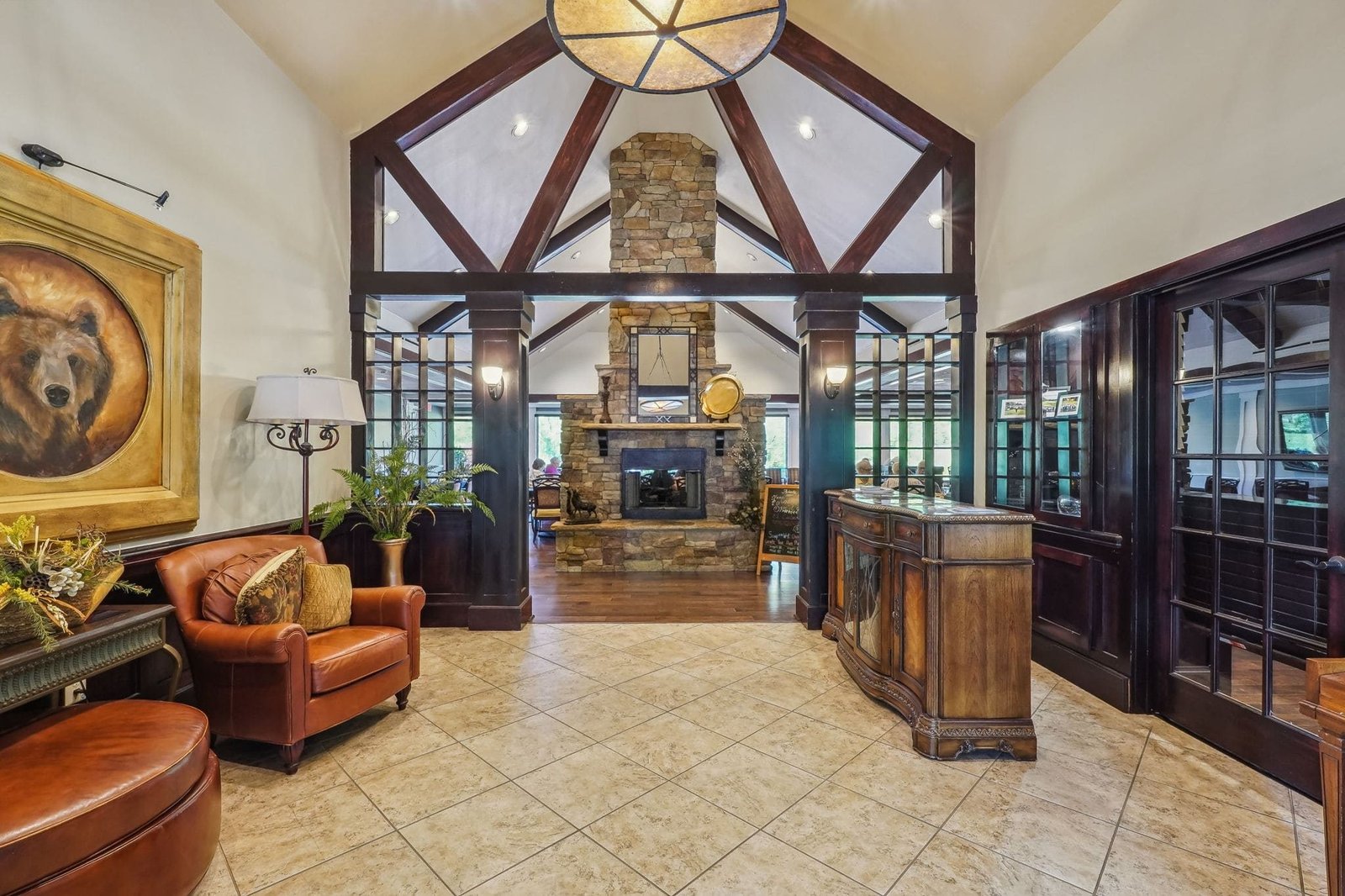
Achasta clubhouse great room interior — vaulted timber-and-stone room, fireplace, leather seating arrangements, large windows looking onto the golf course
Membership Guide · 12-minute read

Achasta Golf Membership: everything you need to know before you buy.

Two membership tiers, separate from real estate ownership. Here’s what each tier includes, what it costs, and how to decide which fits your use case.

I.
The premise · what membership is — and isn’t
The premise

Membership is optional. And separate.

The single most-misunderstood fact about Achasta is that buying a home inside the gates does not automatically grant access to the Jack Nicklaus signature golf course. Membership at Achasta Golf Club is a separate, optional purchase — one of two tiers — and a meaningful share of Achasta residents are not members at all.

The community is private and gated, but the course is private to its members. There is no day-pass walk-on for non-members, no public greens-fee rate, and no resident-of-Achasta discount that bypasses dues. A non-member homeowner inside Achasta cannot, for instance, tee off on a Saturday morning just because their lot is on the fifteenth fairway.

This separation is a feature, not a bug. It keeps HOA dues low (covering only the community itself — gate, common areas, river park) and pushes the cost of running a Jack Nicklaus golf course onto the people who actually want to play it. If your priorities run more toward river park walks, the pool, and dining at the Grill than 18 holes, the social tier exists precisely for you. If you want the practice range, members-only tee times, and tournament play, that’s the full-golf tier. This guide walks you through both — line by line, decision by decision.

II.
The matrix · social versus full golf, line by line
The decision matrix

Social versus full golf, every line item.

How to use this Hover any row to highlight it. Click any row to expand a short note explaining what that line item actually means at Achasta — not the marketing copy version.
Line item
Social Membership casual residents
Full Golf Membership active players
i.
Dues are billed monthly and assessed regardless of seasonal use — you pay through January even if you only play April through October. The ~$550/mo delta between tiers is the price of unlimited course access. Confirm current rates at closing; figures here are illustrative.
ii.
A one-time fee paid on joining. Not refundable in most scenarios, and treated as separate from the home purchase price. Some clubs allow seller-to-buyer transfer of the initiation at sale — ask before you write the offer. Illustrative figure — confirm with current rates at closing.
iii.
Social members do not have standing access to the eighteen holes. They may play as a paying guest of a full-golf member at the prevailing guest fee, but cannot book independent rounds. If your goal is to play the course freely, you need full golf.
iv.
Members typically get a 14-day booking window; guests are usually capped at 3 days. This is the difference between locking a Saturday-morning Father’s-Day foursome two weeks out and scrambling for a 2 p.m. slot two days before. Critical during peak fall season — September through November — when leaf-peepers and members compete for the same tee sheet.
v.
Both tiers include unlimited pool privileges — lap lanes, family deck, pool house. Open spring through fall; closed during the deepest winter months. For families with young children, this alone is frequently the membership-justifying line item.
vi.
Two lit hard tennis courts and six branded pickleball courts — available to both tiers. Programming and clinics run year-round, with member-organized leagues most evenings during shoulder season. The pickleball ladder in particular has become one of the most active social anchors at Achasta.
vii.
The clubhouse great room, the cedar Adirondack firepit, and the members’ patio are open to both tiers. The firepit functions as the unofficial community living room in fall and winter — eight chairs around a stone gas burner with mountain views. Many social-tier residents use the clubhouse as a third space.
viii.
Both tiers may dine at The Achasta Grill — casual lunch, reservation dinner, member events. A separate food-and-beverage minimum applies to most full-golf members (see Hidden Costs below). Social members are typically not bound by the F&B minimum.
ix.
The 19th-hole bar is open to all members regardless of tier. It runs busiest on Friday and Saturday evenings and during tournament weeks. For residents who want a walk-down-the-cart-path social option, this is the line that converts the most undecided buyers from non-member to social-tier.
x.
Assigned locker storage — including shoe locker and showering — is reserved for full-golf members. Social members may use the public restrooms in the clubhouse but do not receive locker assignments. Trivial-sounding, surprisingly load-bearing for members who shower at the clubhouse after a round.
xi.
The driving range and putting green sit at the front of the clubhouse. Full-golf members have unlimited bucket access. Social members can use the range as a paying guest, but it’s an inefficient way to practice frequently — if you’re hitting balls more than twice a month, the math points toward full golf.
xii.
Titleist apparel, custom fittings, soft goods. Full-golf members receive member pricing on most categories; social members are charged the same as outside guests. The annual savings on apparel and ball orders — especially if you wear out a pair of FootJoys a year — is real, but not large enough on its own to drive the tier decision.
xiii.
Club championship, member-guest, charity scrambles, the seasonal calendar. All require full-golf standing. If tournament play is a core part of why you’d join a private course, the social tier won’t satisfy you — this is the dividing line for most serious players.
xiv.
Both tiers can bring guests; the difference is volume. Full-golf members may host more guest rounds per season, with looser repeat-guest restrictions. Matters most for residents who host out-of-town family during fall foliage — if you want your son-in-law to play with you four weekends in October, full golf is the practical answer.

Disclosure  All dollar figures and tier benefits on this page are illustrative for comparison purposes. Membership structures, dues, initiation amounts, and benefit packages are set by Achasta Golf Club and change periodically. Confirm current rates and exact tier terms directly with the club — or with a Gold Peach Realty advisor — at the time of purchase.

III.
The decision · which tier fits which buyer
When each tier makes sense

Two clear use cases. One right answer for you.

Most undecided buyers fall cleanly into one of these two profiles within ten minutes of an honest conversation about how they actually plan to use the community. Read both. The wrong tier is an expensive mistake to undo — especially the initiation fee.

i.

When social makes sense

You bought into Achasta for the community, the river park, the gate, and the location — not the course. You might play golf two or three times a year as a guest. Your weekly use of the club is the pool with grandkids in July, dinner at the Grill on Friday, a glass of wine at the firepit in October.

You like the idea of belonging to something without paying for the part you won’t use. A spouse swims and plays pickleball; the other spouse does not golf. You travel half the year. You’re a weekend resident from Atlanta who only uses the home twenty weekends annually. Social is built for you.

The math: roughly $3,600/year in dues + ~$5K initiation, illustrative, gets you the social fabric of Achasta without the obligation of carrying a full-golf membership you won’t activate.

Buy the community, not the course.
ii.

When full golf makes sense

You will play the course. Not “I’d love to play more” — you will tee off more than twice a month, eight or nine months of the year. You’ll book a tee time on the 14-day window. You’ll show up for the club championship. You’ll want a locker. You’ll wear out range balls.

You’re a retiree or near-retiree who moved north of Atlanta partly because of this course. You’re a remote-work professional who shifts your Thursday afternoons toward eighteen holes from May through October. You want your son and son-in-law in the member-guest. You want the Nicklaus signature in your weekly rotation.

The math: roughly $10,200/year in dues + ~$25K initiation, illustrative. The cost-per-round at fifty rounds a year is reasonable for a private Nicklaus signature; at fifteen rounds a year, it is not.

If the course is the reason you moved here — go full golf.
IV.
Hidden costs · what isn’t on the dues line
Hidden costs

The line items that don’t show up on the brochure.

Monthly dues and initiation are the headline numbers. What separates a happy member from a frustrated one, eighteen months in, is usually one of the supplemental line items below — charges that aren’t always volunteered during the first sales conversation.

  • Cart fees Most rounds carry a per-cart fee on top of dues. Whether riding singles or doubles, expect a per-round cart charge unless the club specifically advertises an unlimited-cart tier. Walking the Achasta layout is possible but unusual — the elevation changes on the river side make it a hike.
  • Food & beverage minimum Full-golf members are typically obligated to spend a quarterly or annual minimum at the clubhouse food-and-beverage operation. Use it or lose it — if you don’t dine, you pay the unused balance anyway. Build it into your “real cost of membership” math.
  • Trail fee for private carts If you own and store your own golf cart, expect a separate trail fee to use that cart on the course. The fee covers cart-path maintenance and bag-storage logistics. It’s a meaningful line for anyone who plans to keep a cart at the house and roll down to the first tee.
  • Capital assessments Member-owned clubs occasionally levy special assessments for major renovations — bunker rebuilds, clubhouse improvements, irrigation. Ask whether any are anticipated in the current fiscal year before signing.

None of these are deal-breakers individually. Cumulatively, they can add 15–25% to the headline annual figure. A buyer mentally budgeting “ten thousand a year for golf” who lands at thirteen thousand will feel surprised, even though the brochure was technically accurate. Ask for a sample annual statement — not just the dues sheet — before you commit.

V.
Transfer · what happens when the home sells
Transfer at sale

Does the seller’s membership come with the house?

This is the single question prospective Achasta buyers most frequently get wrong — and it can swing the practical cost of a purchase by twenty thousand dollars or more. The short answer is: membership and real estate are separate, and what transfers at closing depends entirely on the membership clause in force at the time of sale.

In a typical scenario, the seller’s membership at Achasta Golf Club does not automatically convey to the buyer. The seller resigns; the buyer applies as a new member and pays the prevailing initiation. That’s the default. But several variations matter:

  • Assignable initiation Some membership classes allow the seller to assign their initiation credit to the buyer, who then steps into the seller’s tier without paying initiation again. This can be a meaningful negotiating chip in the purchase agreement — especially on a full-golf membership where initiation is the larger of the two costs.
  • Initiation refund schedule Some clubs refund a portion of initiation to the resigning seller on a sliding schedule — full refund in year one, partial in year five, none after year ten. Ask whether the seller is positioned for any refund, because that figure is sometimes used at the closing table.
  • New buyer requalification Even when initiation transfers, the new buyer typically must apply, meet membership criteria, and be approved by the board. The buyer cannot assume membership without club involvement.
  • Tier downgrade A buyer assuming a full-golf seat may, with the club’s permission, elect to convert it to social at the time of joining. Whether the initiation differential is refunded varies by club rule.

The practical takeaway: ask before you write the offer. A Gold Peach Realty advisor handling an Achasta transaction will confirm with the club exactly what the seller’s membership status enables, and what the buyer’s options are. The wrong assumption — either that membership transfers automatically, or that it definitely doesn’t — leads to either an unfunded surprise at closing or a missed negotiation opportunity. Don’t guess.

VI.
Speak with an advisor
Local advisors · off-market access

One conversation. Twelve years of Achasta closings.

Membership rates change. Tier rules change. The right tier for the home you’re considering depends on details — lot location, course frontage, transfer status — that don’t appear in a brochure. Browse Achasta real estate with Gold Peach Realty — the local North Georgia brokerage that maintains the most complete inventory of Achasta listings, member contacts, and membership-transfer history.

By phone · weekdays 9-6 (770) 283-1223

Looking for homes in North Georgia? Visit Gold Peach Realty at goldpeachrealty.com — your local experts in Dahlonega, Gainesville, and the surrounding mountain communities. Call (770) 283-1223 or email info@goldpeachrealty.com.

Achasta Homes For Sale Dahlonega · North Georgia

Achasta Homes For Sale is an editorial real estate resource for the Achasta community in Dahlonega, Georgia. All transactions are facilitated by licensed Georgia real estate agents at Gold Peach Realty — (770) 283-1223. Membership rates, tier structures, and benefit packages cited above are illustrative only — confirm with the club at the time of purchase.

Looking for homes in North Georgia? Visit Gold Peach Realty at goldpeachrealty.com — your local experts in Dahlonega, Gainesville, and the surrounding mountain communities. Call (770) 283-1223.