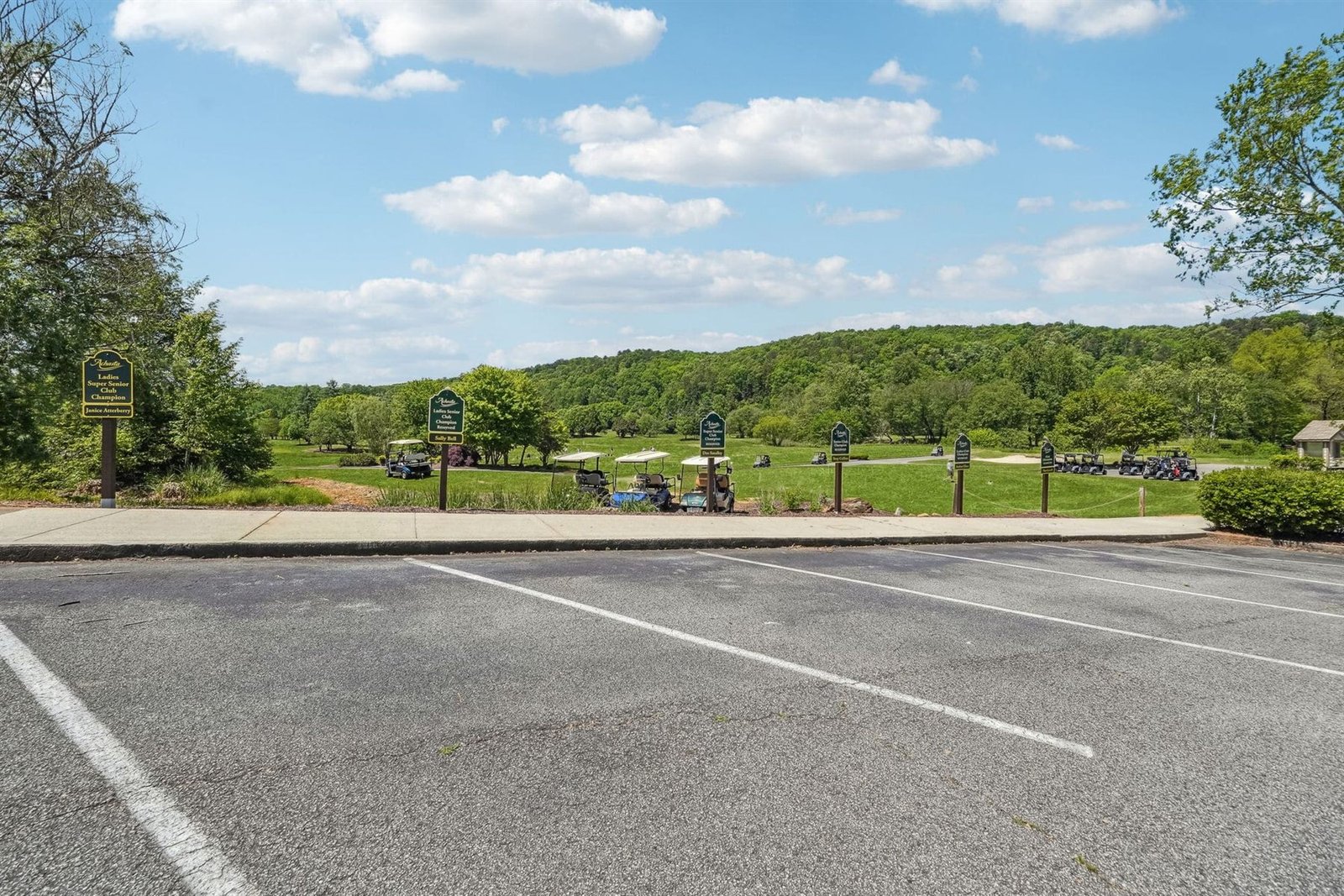
Achasta Golf , discovering the hidden jewel of Dahlonega.
The only Jack Nicklaus signature course in the North Georgia mountains , eighteen holes routed through the Chestatee River corridor and the hardwood foothills of Lumpkin County, opened in the mid-1990s and quietly maintained ever since.
- Designer
- Jack Nicklaus signature
- Opened
- ~1996
- Layout
- 18 holes · par 72 (standard)
- Setting
- Chestatee River · private
A signature commission, not a brand-name license.
In the mid-1990s, the North Georgia development principals assembling the Achasta property faced a sequencing decision familiar to any community builder: design the golf course first, then plan the residential lots around it , or design the lots first and route the course through what was left. They chose the former. The course came first, the homes followed, and the routing was given the better land. That sequencing decision is part of why Achasta photographs the way it does today.
The bigger decision was the designer. Jack Nicklaus’s design organisation operates at multiple tiers , Nicklaus Design, Nicklaus Design Group, branded courses, and Nicklaus signature courses, which carry Mr. Nicklaus’s personal routing and approval. The signature tier is the rarer and the more deliberate. Achasta secured a signature commission, making it the only Jack Nicklaus signature course in the North Georgia mountains , a distinction that has remained true through the decades since.
The site presented the kind of design problem Nicklaus signature work has historically embraced: real elevation change across a working river corridor, mature hardwood canopy that must be navigated rather than cleared, and a buildable shelf large enough to seat eighteen holes without compromising on hole length or shot variety. Mountain-routing, as a design discipline, has its own vocabulary , downhill par-3s with severe carries, doglegs that read differently in morning versus afternoon light, fairways that fall toward water rather than away. Achasta gave the design team a real instance of each.
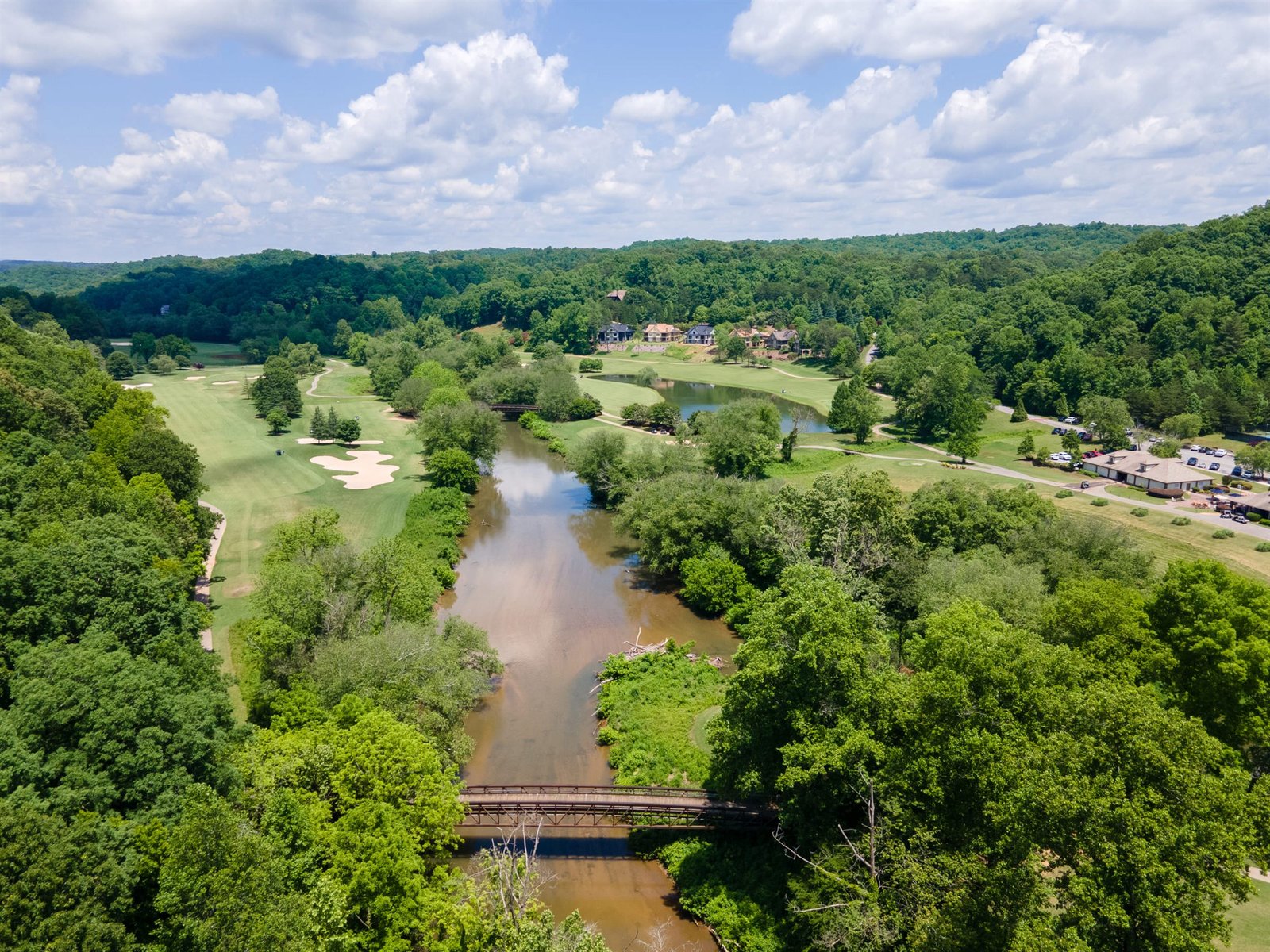
The Chestatee was the brief, not the obstacle.
The Chestatee River bisects the Achasta property roughly east-to-west. A less ambitious routing would have kept the course on one bank and routed only cart paths across the water. The Nicklaus design took the opposite approach: the course was deliberately routed across the river on the back nine, with three pedestrian footbridges connecting the holes and one tee shot , on hole fifteen , required to carry the river itself.
That choice does several things at once. It makes the back nine visually distinct from the front. It gives the routing a clear narrative arc , the player crosses water repeatedly as the round progresses, with the carry on fifteen as the moment of greatest commitment. It anchors the property’s residential value around the river itself, making river-frontage and footbridge-adjacent parcels the rarest tier of the community’s real estate inventory. And it preserves the river as a continuous feature in the landscape, rather than a boundary the course politely declines to engage.
“Jack Nicklaus signature courses typically aim for routings that engage the site’s most distinctive natural feature head-on, rather than around it.”
Par 72, 100-plus feet of vertical, hardwood for the backdrop.
The Achasta routing is laid out as a standard par 72 , four par-5s, four par-3s, ten par-4s, with the par-3s distributed evenly across the round rather than clustered. The standard tee-set yardages run in the ranges typical of a private mountain signature course: a championship set near 7,000 yards, member tees stepping forward to roughly 6,200, 6,500, with forward tees and family tees from there. Exact yardage cards are maintained by the Achasta Club and are the authoritative source.
The most distinctive architectural feature is the elevation change , more than a hundred feet vertical across the property. Several holes play markedly downhill from tee to fairway, which changes the way a normal-yardage shot performs in the air. Others demand the opposite: an uphill approach where the green sits well above the landing area, requiring an extra club and a softer landing angle. The mountain-routing discipline is part of what makes the round feel different from a flat-course experience even when the yardage on the scorecard looks the same.
The second distinctive choice is the use of mature native hardwood as the visual backdrop on most holes. Where the routing permitted, the design preserved old-growth oak, hickory, and tulip poplar rather than clearing through to open the holes. The result is fairway corridors that feel framed rather than carved , closer in atmosphere to a Pinehurst or a Carolina-mountain course than to a Florida or Arizona desert layout. This decision also has a real maintenance implication: the canopy cools the turf in summer, but it also means morning shade lingers on east-facing greens longer than on a sun-exposed course.
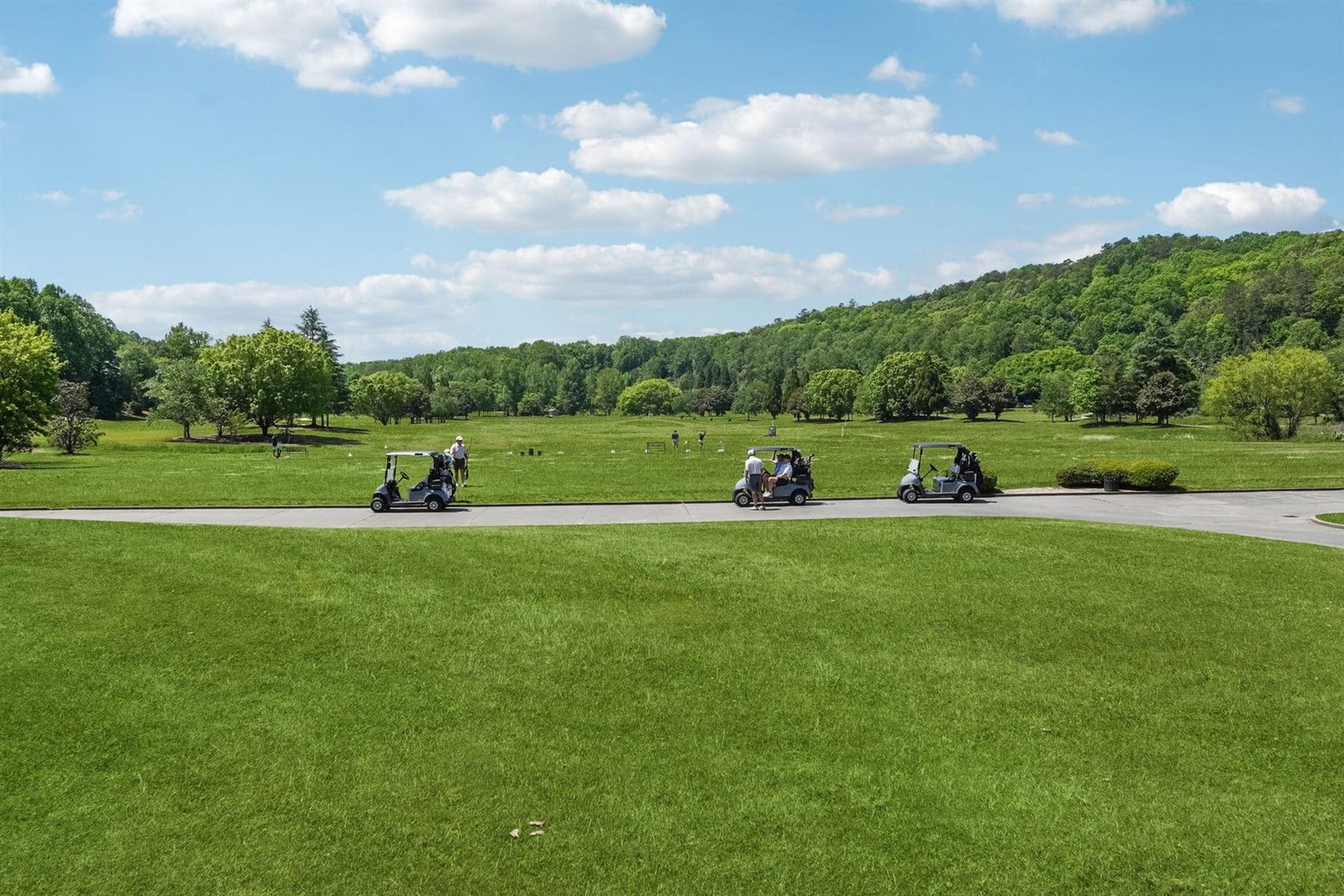
Three holes that define the routing.
Every round of Achasta will have its own memory. The three holes below are the ones the routing is built to be remembered for , one early hole that introduces the design grammar, the river-carry that defines the back nine, and the closing hole that frames the round. Design notes are generally framed; exact hole specifications are maintained by the Achasta Club.
Hole three sets the front-nine tone , an early-in-the-round hole where the routing introduces its design grammar: the framed corridor through preserved hardwood, the elevation step from tee to fairway, and the placement of hazards that demand a thought-through line off the tee rather than a blind crush. By the time the player walks off this green, the round has shown its hand.
Hole fifteen is the moment the river earns its name on the scorecard. The tee shot is asked to carry the Chestatee directly , not to skirt it on a footbridge, not to play short and lay up, but to commit a yardage-correct shot over moving water. The hole is what makes the back nine specifically the back nine. For most members, fifteen is the hole they describe first when describing the course to a guest.
Hole eighteen brings the round back to the clubhouse, by design. The closing hole frames the approach toward the clubhouse complex, with the practice range, the putting green, and the clubhouse architecture in the visual backdrop. It is the photograph at the end of the round , the hole that turns four hours of golf into a coherent memory of where the round ended.
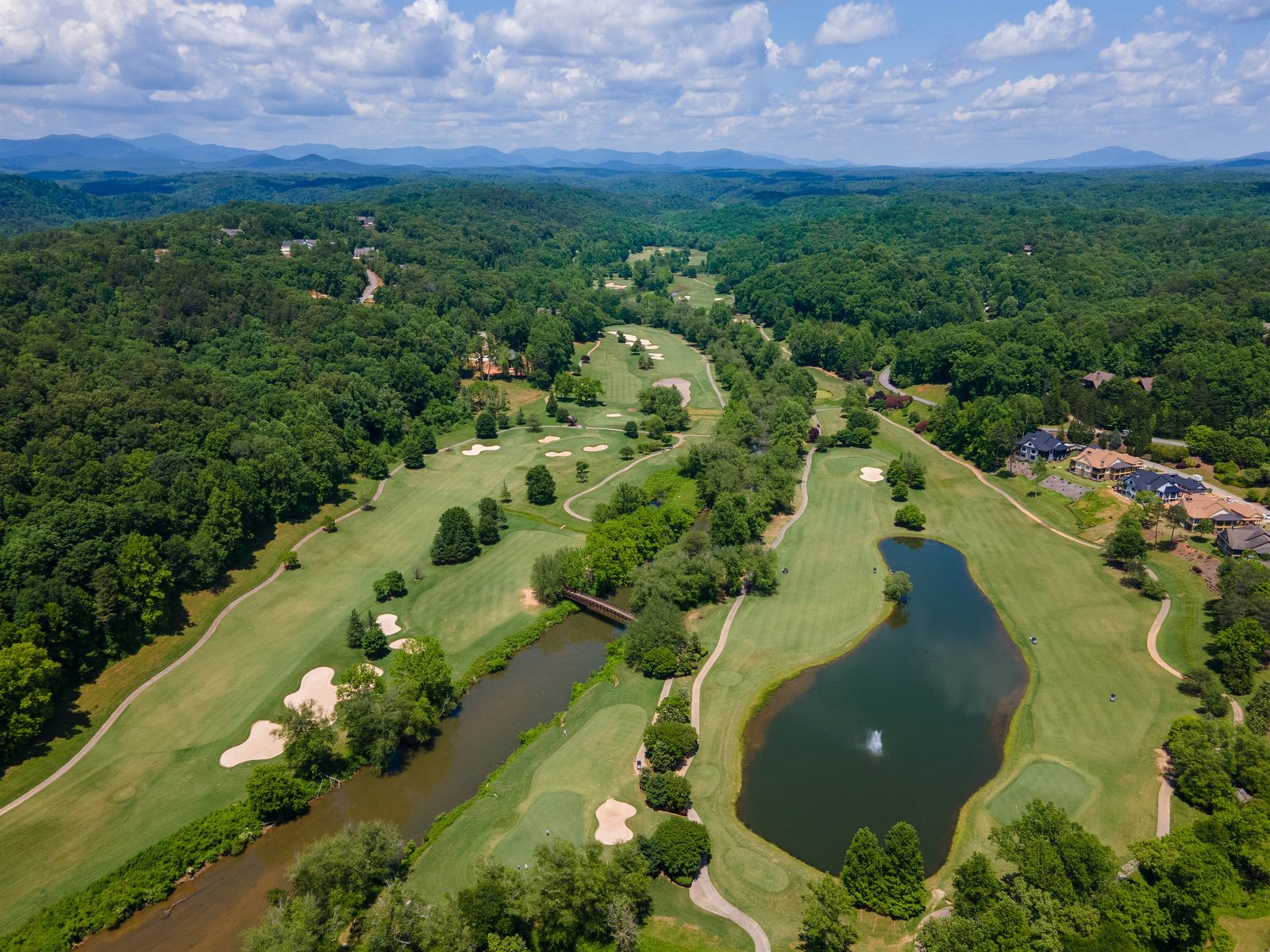
A maintained routing, not a renovated one.
Achasta has not been subject to the kind of wholesale Nicklaus-redesign cycle that some signature courses see at the twenty-year mark. The routing the course opened with is, in its essentials, the routing the course still plays today. What has changed are the kinds of things that change at any private course over the decades , green-complex resurfacing, tee-box rebuilds, bunker reshaping, drainage upgrades on the river-adjacent holes, and turf-type evaluations as the regional climate moves.
The clubhouse complex itself underwent a significant renovation in 2014, with subsequent improvements through the mid-to-late 2010s and into the 2020s. The renovation work is a separate project from the course routing; the routing has remained the Nicklaus signature design as opened. Where specific tournament play has occurred at Achasta , member events, regional invitationals, charity competitions , the records are maintained by the Achasta Club rather than published broadly.
For the current course experience , tee-set yardages, the daily playing condition, member access, and limited guest play , the authoritative source is the Achasta Club and the pro shop. For the buyer-side question , whether a fairway-frontage parcel is the right way to capture the value of the course in your real-estate purchase , see the golf-community page, the buyer’s guide, or speak with a Gold Peach Realty advisor at (770) 283-1223.
The course shapes the real estate. The advisor explains how.
Fairway-frontage parcels , especially on the back nine, near the Chestatee crossings , carry a price premium and trade off-market more often than not. Gold Peach Realty maintains the local inventory log.
By phone · weekdays 9-6 (770) 283-1223